
Seasonal Variation of Air Pollutants Concentration around Port Harcourt Metropolis, Rivers State, Nigeria
- a Institute of Natural Resources, Environment and Su, University of Port Harcourt
Highlights
- Examined seasonal variations in air pollutant concentrations across Port Harcourt.
- Assessed pollutants at Airport Road, Rumuokoro, and Nigerian Port Authority.
- Identified elevated particulate matter and carbon monoxide concentrations.
- Observed generally higher particulate concentrations during the dry season.
- Linked pollution variations to anthropogenic activities and microclimatic factors.
- Recommended strengthened air-quality monitoring, regulations, enforcement, and public awareness.
Abstract
Keywords
Seasonality has always been a factor determining pollution concentration in the lower atmosphere. Therefore, the introduction of contaminants such as Sulphur Oxides (SOx), Nitrogen Oxides (NOx), Lead, Ozone, Benzene, Carbon Oxides (COx) and Particulate Matters such as PM10, PM2.5, and PM1 at toxic levels by natural processes and human activities could practically affect the quality of air, and in turn, the quality of life of living things (Balogun & Orimoogunje, 2015). High air pollution levels are experienced in most urban environments and exhibit substantial regional variation (Shelton et al., 2022). Air pollution is one of the most significant environmental risks to individuals, public health, ecosystems, and economies (Liang & Gong, 2020; Manisalidis et al., 2020). The mortality rate worldwide from respiratory and cardiovascular diseases related to air pollution is around 6.7% (Shelton et al., 2022).
The release of air emissions from human activities is causing a growing global challenge known as air pollution (Motesaddi et al., 2017; Von Schneidemesser et al., 2019; Fakinle et al., 2020). Urban air pollution has risen due to human activity and inadequate environmental policy (Komolafe et al., 2014). High-quality air is most important to humans, plants, animals, and materials. Typically, a human requires 12 kg of high-quality air per day, significantly less than their food intake, which is 12-15 times greater (Fakinle et al., 2020). Nevertheless, human actions that disrupt or pollute the constituents of the surrounding atmosphere might have severe consequences and pose a threat to the existence of life on Earth (Wang et al., 2014; Fakinle et al., 2020).
Air pollution poses a significant environmental challenge, especially in developing nations (Mannucci and Franchini, 2017; Echendu et al., 2022). Air pollution is caused by the release and spread of air pollutants (Echendu et al., 2022). Nigeria, a nation in Africa with a population of over 200 million (Echendu 2020), is afflicted by many environmental issues, including air pollution. The air quality in its major cities is among the most abysmal globally (Okon 2019). During a five-year evaluation conducted by the World Health Organisation (WHO) from 2008 to 2013, four major Nigerian cities were among the top 20 most polluted cities in the world regarding the average annual concentration of PM10, which refers to particle pollution in the air. Onitsha exhibited the highest pollution level among cities, surpassing the World Health Organization's recommended yearly mean of 20gm-3 by 30, as documented by Yakubu (2018) and Echendu et al. (2022).
Diverse contaminants are introduced into the atmosphere from natural and human-caused activities, including residential sources, flaring, and emissions from vehicles and industries (Komolafe et al., 2014). Releasing pollutants such as NOx, CO, SOx, VOC, THC, and H2S from human activities can pose environmental and health hazards (Komolafe et al., 2014). Additionally, it is recognised as a factor in anthropological change, global warming, environmental pollution, heightened carbon footprint, and acid rain. The impact on human lives is significant, as it leads to the development of diseases and can lead to long-term health conditions. In addition to its effects on human health, air pollution alters our anthropological, posing potential risks to local and global communities (Komolafe et al., 2014). The unavailability of adequate scientific knowledge on air quality management significantly hinders the slow progress of setting the air quality management policy and its implementation (Shelton et al., 2022). This study examines the seasonal variation of air pollutants (NO2, SO2, H2S, CH4, O3, Co, CO2, PM1, PM2.5 and PM10) around Port Harcourt metropolis, specifically considering anthropogenic activities.
Materials and Method
Study Area
Port Harcourt is the capital of Rivers State. It is the main city in the state and has one of the largest seaports in the Niger Delta region of Nigeria. It is the hub of the state's industrial, commercial, administration, and other activities. The city lies between latitude 040 43’ and 040 57’ North of the Equator and between 060 53’ and 070 08’ East of the Greenwich Meridian. The city is surrounded by patches of islands and creeks of the Niger Delta, such as the Dockyard Creek, Bonny River and Amadi Creek, at a height of about 12m above sea level. It is approximately 60km from the crest upstream of the Bonny River and covers an estimated 1811.6 km2. The city is bounded to the north by Oyigbo and Etche Local Government Areas, to the south by Okrika Local Government Area, to the east by Okrika and Eleme Local Government Areas and to the west by Emohua Local Government Area (Obafemi, 2006).
Sample Collection
The samples were collected during the morning in June 2024 for the wet season and December 2024 for the dry season, while designated points were randomly selected based on various human activities associated with the area. The areas selected for the study include Airport Road (AR), Rumuokoro (Rum), and the Nigerian Port Authority (NPA).
i Micro Climatic Parameters: The parameters include wind speed (WS), air temperature (0C) and relative humidity (RH). A Digital Anemometer (Taylor wind scope) measured the WS in meters per second (m/s). A hand-held digital thermometer measured the air temperature in degrees Celsius (0C). A logger (Testo 450) was used to determine the relative humidity. The logger has an atmospheric pressure probe (Barometer) and a relative humidity probe (Hygrometer). The logger measures and stores the value in percentage (%).
ii Air Quality Parameters: Sampling and measurements of the chemical constituents of atmospheric pollutants were measured in-situ with hand-held air quality monitors. Ambient air quality measurements were carried out on site using Aeroqual 500 Multi-Gas Analyzer, with up-to-date calibration. The Aeroqual handheld monitors are specifically designed to give accurate ambient gas measurement, with a dedicated sensor per parameter. The parameters measured include nitrogen dioxide (NO2), sulphur dioxide (SO2), carbon monoxide (CO), particulate matter PM1, PM10, PM2.5, Hydrogen sulphide (H2S), Methane (CH4), Ammonia (NH3), Ozone (O3), Carbon IV oxide (CO2).
Data Analysis
The study adopted descriptive statistics in mean value, and the findings were presented using tables. Aside from the tabular representation of findings, the study also used graphs and charts to summarise and describe findings in a manner that better understood their attributes, differences, and patterns.
Result and Discussion
The air pollutants concentration across the study area during the wet and dry seasons and their seasonal variation (SV) were assessed and presented in Table 1 and Figure 1. Among the pollutants, NO2, SO2 and CO were undetected at AR and NPA across the season, while H2S was undetected across all locations and seasons. Ipeaiyeda and Adegboyega (2017) suggested that diesel-powered machineries or vehicles are the primary sources of NO2 emission. The lack of detection of SO2 in some of the studied locations was similar to the study by Etim (2016). The primary source of H2S is the microbial decay of organic matter and the reduction of sulphate ions (Gobo et al., 2012). At Rum, the NO2 (0.006ppm and 0.122pm) and SO2 (0.03ppm and 0.05ppm) were within the WHO-AQG of 24ppm while the CO concentrations of 18ppm and 6ppm were above the WHO-AQG of 4ppm. The CH4 concentration was higher at AR than in other locations, while the detected O3 across the locations and seasons were within the WHO-AQG of 100 ppm. The CH4 reported for the study was lower than those reported by Osaiyuwu and Ugbebor (2019) for oil facilities hosting communities. The reported concentrations are within the range of those reported by Akhionbare et al. (2020) for locations within similar study areas.
Table 1: Air Polluants Concentrations and Seasonal Variation
|
|
Wet Season |
Dry Season |
Seasonal Variation |
WHO |
||||||
|
|
AR |
Rum |
NPA |
AR |
Rum |
NPA |
AR |
Rum |
NPA |
|
|
NO2 |
0 |
0.006 |
0 |
0 |
0.122 |
0 |
0 |
-0.116 |
0 |
25 |
|
SO2 |
0 |
0.03 |
0 |
0 |
0.05 |
0 |
0 |
-0.02 |
0 |
40 |
|
H2S |
0 |
0 |
0 |
0 |
0 |
0 |
0 |
0 |
0 |
42 |
|
CH4 |
58 |
9 |
7 |
65 |
38 |
2 |
-7 |
-29 |
5 |
|
|
O3 |
0.33 |
0.48 |
0.18 |
0.36 |
0.31 |
0.11 |
-0.03 |
0.17 |
0.07 |
100 |
|
CO |
0 |
18 |
0 |
0 |
6 |
0 |
0 |
12 |
0 |
4 |
|
CO2 |
0.79 |
1.44 |
0 |
0.8 |
0.91 |
0 |
-0.01 |
0.53 |
0 |
|
|
PM1 |
10 |
21 |
14 |
29 |
21 |
32 |
-19 |
0 |
-18 |
|
|
PM2.5 |
12 |
55 |
26 |
39 |
65 |
42 |
-27 |
-10 |
-16 |
15 |
|
PM10 |
16 |
41 |
31 |
58 |
41 |
31 |
-42 |
0 |
0 |
45 |
|
TVOC |
1.33 |
0.77 |
0.296 |
0.831 |
0.82 |
0.296 |
0.499 |
-0.05 |
0 |
0.5 |
|
RH |
68 |
68 |
77 |
51 |
51 |
45 |
17 |
17 |
32 |
|
|
WS |
0.8 |
0.3 |
0.2 |
1.2 |
0.3 |
0.4 |
-0.4 |
0 |
-0.2 |
|
|
Temp. |
28 |
31 |
28 |
30 |
31 |
30 |
-2 |
0 |
-2 |
|
AR: Airport Road, Rum: Rumuokoro, NPA: Nigeria Port Authority, SV: Seasonal Variation. All parameters readings are ppm except PM and TVOC in μg/m3, RH in %, WS in m/s and Noise in DBKEY: (-) indicated an increase in concentration from the Wet season to the Dry Season, and (+) indicated a decrease in concentration from the Wet season to the Dry Season
The CO2 was reported for AR at 0.79ppm and 0.8ppm and at Rum at 1.44ppm and 0.91ppm, indicating reduced concentration for AR at -0.01 and increased concentration for Rum at 0.53; however, CO2 was undetected at NPA for dry and wet seasons. Etim (2016) identified various factors, such as time of day, ambient temperature, high traffic, and vehicle quality (including age, maintenance, and fuel type), that can contribute to the concentration of CO and CO2 in an environment. PM1, PM10, and PM2.5 were detected across the locations and seasons, while the highest concentration was reported at Rum, and the seasonal variation revealed an increased concentration from the wet to dry season. The PM1 concentration reported in this study was higher than those reported by Gobo et al. (2012) around living environments during the wet and dry seasons. The reported concentration was lower than those reported by Onwuna et al. (2022), although all the concentrations exceeded the WHO standard except at AR during the wet season. According to Ekett et al. (2022), anthropogenic activities contributed to the higher concentration of PM2.5 in the environment. The PM10 reported concentrations in this study were lower than those reported by Onwuna et al. (2022) around an environment where artisanal refinery activities.
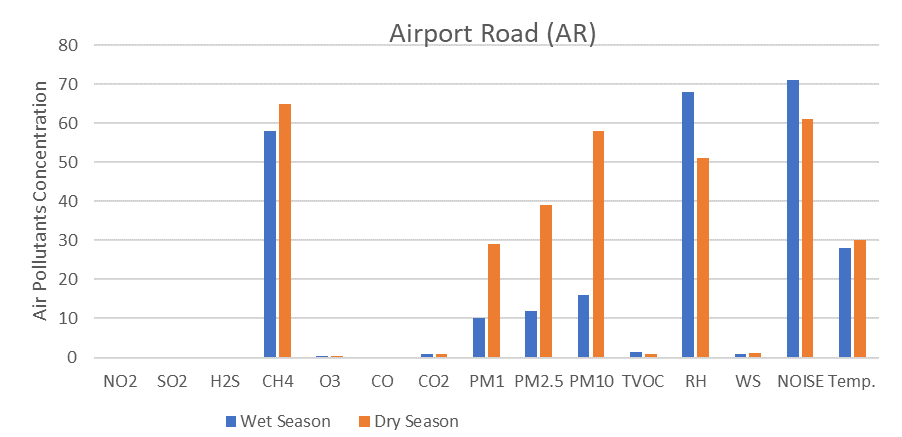
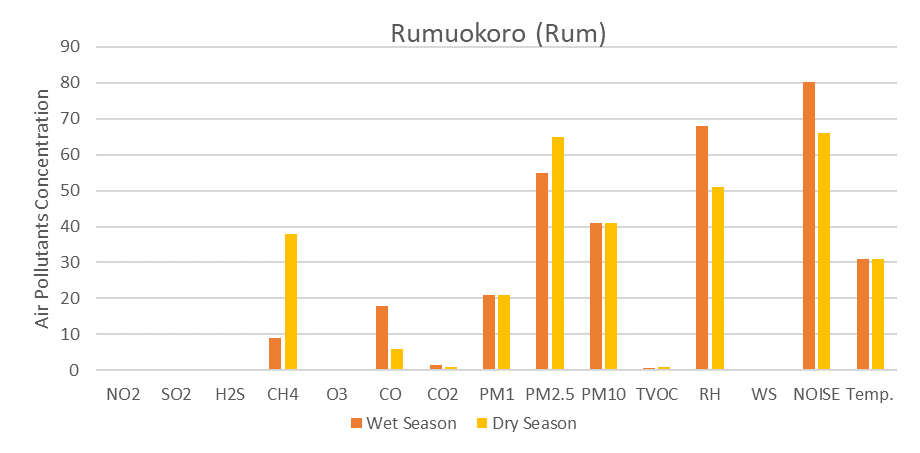
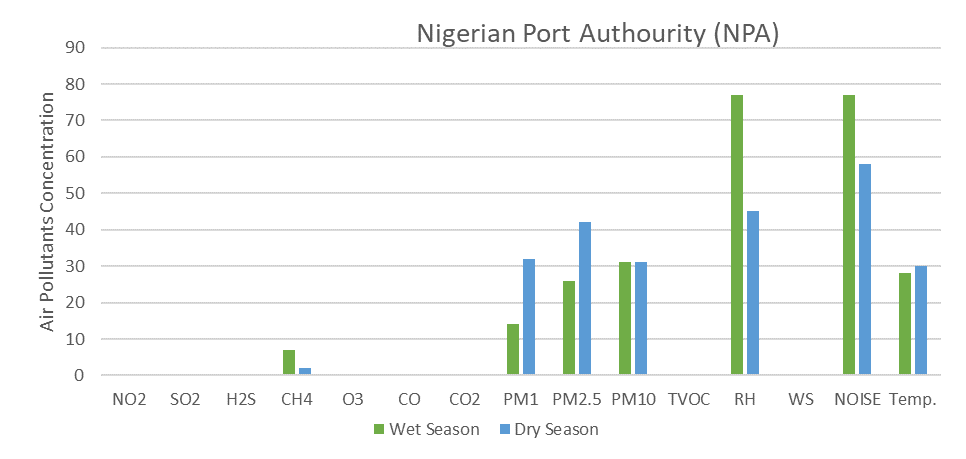
Figure 1: Air Pollutants Concentration Across Studied Locations
Ajayi et al. (2023) state that PM10 is a significant pollutant that can penetrate sensitive parts of the respiratory system, perhaps causing or worsening cardiovascular, pulmonary, and oncological diseases. The concentration of TVOC exceeded the WHO-AQG across locations except at NPA for both seasons. Overall, the outcome could suggest the influence of similar sources or patterns throughout the seasons. Studies such as Onwuna et al. (2022) and Gobo et al. (2012) reported variations in their air pollutants concentrations and suggested the influence of anthropogenic and climate change. Microclimate parameters showed consistency in their concentration across the seasons, and according to Shelton et al. (2020), seasonal variation of air pollutants is caused by seasonal variations of meteorological factors such as atmospheric wind speed, relative humidity, and temperature.
Conclusion
With the rapid population growth and industrialization across developing countries in recent times, the release of air pollutants into the environment has drawn global attention to the health-related impact on humans. The variation in the concentration of air pollutants across the seasons differs across locations with pollutants such as O3 and CH4, while PMs showed a similar pattern of increased concentration from the wet season to the dry season. The study concluded that variations in air pollutants across the studied locations suggest the influence of similar sources or patterns based on anthropogenic or microclimate parameters. There is a need to develop monitoring mechanisms, regulations and enforcement measures by relevant regulatory bodies for air quality management practices. It is essential to educate those who live, work, or spend considerable time near roadways about the harmful effects of long-term exposure to pollution.
References
Ajayi, S. A., Adams, C. A., Dumedah, G., Adebanji, O. A., Ababio-Donkor, A., Ackaah, W. and Kehinde, A. (2023). Public perceptions of vehicular traffic emissions on health risk in Lagos metropolis Nigeria: A critical survey. Heliyon, 9(5), e15712–e15712. https://doi.org/10.1016/j.heliyon.2023.e15712
Akhionbare, S. M. O., Okweri-Eric, O. G., & Ihejirika, C. E. (2020). Comparative Assessment of Air Quality in Igwuruta and Aluu, Rivers State, Nigeria. Journal of Applied Sciences and Environmental Management, 24(4), 607–614. https://doi.org/10.4314/jasem.v24i4.10
Balogun, V.S. and Orimoogunje, O.O.I. (2015) An Assessment of Seasonal Variation of Air Pollution in Benin City, Southern Nigeria. Atmospheric and Climate Sciences, 5, 209-218. http://dx.doi.org/10.4236/acs.2015.53015
Echendu, A. J., Okafor, H. F., & Iyiola, O. (2022). Air Pollution, Anthropological Change and Ecosystem Health in the Niger Delta. Social Sciences, 11(11), 525. https://doi.org/10.3390/socsci11110525
Ekett, S. I., Marcus, A. C. & Nwineewii, J. D. (2022). Evaluation of particulate matter (pm2.5) in reclamation road ambient air in Port Harcourt. FNAS Journal of Scientific Innovations, 3(3), 92-98.
Etim, E. U. (2016). Air pollution emission inventory along a major traffic route within Ibadan Metropolis, southwestern Nigeria. African Journal of Environmental Science and Technology , 10(11), 432-438
Fakinle, B. S., Odekanle, E. L., Olalekan, A. P., Ije, H. E., Oke, D. O., & Sonibare, J. A. (2020). Air pollutant emissions by anthropogenic combustion processes in Lagos, Nigeria. Cogent Engineering, 7 (1), 1808285. https://doi.org/10.1080/23311916.2020.1808285
Gobo, A E; Ideriah, T. J. K.; Francis, T. E. & Stanley, H. O. (2012). Assessment of air quality and noise around okrika communities, Rivers State, Nigeria. Journal of Applied Science and Environmental Management, 16 (1) 75 – 83
Ipeaiyeda, A. R. and Adegboyega, D. A. (2017). Assessment of Air Pollutant Concentrations Near Major Roads in Residential, Commercial and Industrial Areas in Ibadan City, Nigeria. Journal of Health & Pollution, 7 (13)
Komolafe, A. A., Adegboyega, S. A., Anifowose, A. Y. B., Akinluyi, F. O., & Awoniran, D. R. (2014). Air pollution and anthropological change in Lagos, Nigeria: Needs for proactive approaches to risk management and adaptation. American Journal of Environmental Sciences, 10(4), 412–423. https://doi.org/10.3844/ajessp.2014.412.423
Liang, L., Gong, P. Urban and air pollution: a multi-city study of long-term effects of urban landscape patterns on air quality trends. Science Report 10, 18618 (2020). https://doi.org/10.1038/s41598-020-74524-9
Manisalidis I., Stavropoulou E., Stavropoulos A. and Bezirtzoglou, E. (2020). Environmental and health impacts of air pollution: A review. Frontier Public Health 8:14. doi: 10.3389/fpubh.2020.00014
Mannucci, P. M., Harari, S., Martinelli, I., & Franchini, M. (2015). Effects on health of air pollution: a narrative review. Internal and Emergency Medicine, 10(6), 657–662. https://doi.org/10.1007/s11739-015-1276-7
Motesaddi, S., Hashempour, Y., & Nowrouz, P. (2017). Characterizing of Air Pollution in Tehran: Comparison of Two Air Quality Indices. Civil Engineering Journal, 3(9), 749–758. https://doi.org/10.21859/cej-030911
Okon, E. O. (2019). Exposure to Particulate Matter Air Pollution in Nigeria: Empirical Investigation. Asian Research Journal of Current Science, 1: 27–33.
Onwuna, D. B., Stanley, H. O., Abu, G. O., & Immanuel, O. M. (2022). Air Quality at Artisanal Crude Oil Refinery Sites in Igia-Ama, Tombia Kingdom, Rivers State, Nigeria. Asian Journal of Advanced Research and Reports, 74–83. https://doi.org/10.9734/ajarr/2022/v16i12450
Osaiyuwu, R. C., & Ugbebor, J. N. (2019). Air quality assessment of some oil facilities host communities in Rivers State. Nigerian Journal of Technology, 38(1), 242. https://doi.org/10.4314/njt.v38i1.29
Shelton, S., Liyanage, G., Jayasekara, S., Pushpawela, B., Rathnayake, U., Jayasundara, A. and Jayasooriya, L. D. (2022). Seasonal Variability of Air Pollutants and Their Relationships to Meteorological Parameters in an Urban Environment, Advances in Meteorology, 5628911. https://doi.org/10.1155/2022/5628911
von Schneidemesser, E., Steinmar, K., Weatherhead, E. C., Bonn, B., Gerwig, H., & Quedenau, J. (2019). Air pollution at human scales in an urban environment: Impact of local environment and vehicles on particle number concentrations. Science of the Total Environment, 688, 691–700. https://doi.org/10.1016/j.scitotenv.2019.06.309
Wang, S., Fang, C., Ma, H., Wang, Y., & Qin, J. (2014). Spatial differences and multi- mechanism of carbon footprint based on GWR model in provincial China. Journal of Geographical Sciences, 24(4), 612–630. https://doi.org/10.1007/s11442-014-1109-z
Yakubu, O. H. (2018). Particle (Soot) Pollution in Port Harcourt Rivers State, Nigeria—Double Air Pollution Burden? Understanding and Tackling Potential Environmental Public Health Impacts. Environments, 5 (2). https://doi.org/10.3390/environments5010002
How to Cite This Article
Ugwa, C.D., Adesope, O.M., Numbere, A.O. (2024). Seasonal Variation of Air Pollutants Concentration around Port Harcourt Metropolis, Rivers State, Nigeria. Environmental Monitoring and Pollution Studies, 1(1), 7-12. https://doi.org/10.70726/emps.2024.6575002