
Women Decision-Making Processes Within Traditional Institutions in Bayelsa State
- a University of Port Harcourt
Highlights
Not provided.
Abstract
This study examined the extent of women’s inclusion in decision-making processes within traditional institutions in Bayelsa State, with particular attention to their representation in traditional decision-making councils, participation in formal peace negotiations, involvement in peacebuilding discussions, consideration of their opinions during traditional conflict resolution, and the availability of structured mechanisms supporting their inclusion. A descriptive survey research design was adopted, and data were analysed using descriptive statistics, including mean scores and standard deviations. The analysis was based on responses from 387 respondents, as presented in Table 4.1. The findings revealed a generally low extent of women’s inclusion in traditional decision-making processes, with a grand mean of 2.09 and a standard deviation of 0.92. All five indicators recorded mean scores below the benchmark of 2.50. The highest mean score was recorded for the consideration of women’s opinions during traditional conflict resolution processes (M = 2.17, SD = 0.93), followed by the encouragement of women’s involvement in peacebuilding discussions (M = 2.20, SD = 0.95). However, the availability of structured mechanisms supporting women’s inclusion recorded the lowest mean score (M = 1.97, SD = 0.88), while adequate representation in traditional decision-making councils also remained low (M = 2.03, SD = 0.90). These findings suggest that women’s participation in traditional institutions was limited, particularly in terms of formal representation and institutionalized opportunities for involvement. The study concludes that strengthening women’s inclusion requires improved representation in traditional councils, the establishment of formal participation mechanisms, and greater opportunities for women to contribute meaningfully to peacebuilding and conflict-resolution processes.
Keywords
Introduction
The inclusion of women in decision-making processes is an essential component of inclusive governance, gender equality, community development and sustainable peacebuilding, as it enables women to contribute their knowledge, experiences and perspectives to decisions affecting their families and communities (United Nations, 2024; UN Women, 2025). In traditional institutions, decision-making processes involve consultations, community meetings, dispute resolution, customary law administration, allocation of communal resources, conflict management and the formulation of rules governing community relationships. These institutions are particularly important in Nigeria because traditional rulers, chiefs, council elders, clan heads and other customary authorities often serve as intermediaries between community members and formal government structures, making their inclusiveness relevant to local governance and social stability (United Nations in Nigeria, 2022; UN Women, 2025).
Women’s participation in decision-making has received increasing attention in international development discourse, particularly through Sustainable Development Goal 5, which seeks to achieve gender equality and empower all women and girls, and Sustainable Development Goal 16, which promotes inclusive, participatory and representative decision-making at all levels (United Nations, 2024). Meaningful participation goes beyond women attending community meetings or being consulted on issues; it also includes their ability to express opinions freely, influence deliberations, participate in negotiations, hold leadership positions and contribute to final decisions. Consequently, assessing women's inclusion in traditional institutions requires examining not only their numerical representation but also the extent to which their views influence decisions concerning community welfare, conflict resolution, resource management and development priorities (United Nations, 2024; UN Women, 2025).
In Nigeria, the participation of women in leadership and governance remains an important gender-equality concern despite the existence of constitutional guarantees of fundamental rights and national policy commitments to women's empowerment. The Revised National Gender Policy 2021–2026 provides a policy framework for advancing gender equality, while national and international assessments continue to identify persistent barriers to women's representation in political leadership and public decision-making (Federal Ministry of Women Affairs, 2021; UN Women, 2024). Human Rights Watch (2024) reported that women won only 20 of the 469 seats in Nigeria's National Assembly in the 2023 general elections, illustrating the continuing gap between women's participation in society and their representation in formal political leadership. Although elected political institutions differ from traditional institutions, these figures provide broader context for examining the structural and cultural factors that may affect women's access to leadership and decision-making positions in Nigerian communities. Bayelsa State, located in Nigeria's Niger Delta region, provides an important setting for investigating women's inclusion in traditional decision-making because community governance, customary authority, communal relationships and local conflict-management practices form part of the wider social environment in which decisions affecting residents are made. Traditional institutions may include councils of chiefs, community development leadership structures, clan authorities, elders and other customary bodies whose responsibilities can involve settling disputes, maintaining communal norms, mediating disagreements and representing community interests. The extent to which women participate in these structures is therefore relevant to understanding whose perspectives are considered in local governance and whether decisions adequately reflect the interests of different groups within the community (United Nations in Nigeria, 2022; UN Women, 2025).
Women's inclusion in traditional institutions may take different forms, ranging from membership of community councils and participation in town-hall meetings to representation in women's associations, appointment as traditional leaders, involvement in peace committees and participation in negotiations over communal disputes. However, the presence of women in community activities does not automatically mean that they have equal authority to determine outcomes. Women may contribute to peacebuilding and community mobilisation while remaining underrepresented in the formal spaces where final decisions are made. The United Nations has consequently emphasised the importance of strengthening women's participation in governance and addressing social and institutional barriers that restrict their influence in public life (United Nations, 2024; UN Women, 2025).
Several factors may influence the level of women's inclusion in traditional decision-making processes in Bayelsa State, including customary practices, gender-role expectations, educational opportunities, economic independence, access to information, family responsibilities and the willingness of traditional authorities to accommodate women in leadership positions. Other relevant considerations include whether women are permitted to attend council meetings, whether they can speak during deliberations, whether their recommendations are considered and whether they can occupy influential positions within traditional governance structures. These factors should be examined empirically rather than assumed to operate uniformly across all communities, because customary practices and institutional arrangements may differ between communities and ethnic groups (Nigerian Women's Trust Fund, 2024; UN Women, 2024).
The importance of women's participation also extends to peacebuilding and conflict resolution, where inclusive decision-making can create opportunities for diverse community members to communicate their concerns, contribute to negotiations and support peaceful settlement of disputes. In Nigeria, traditional and religious leaders have been encouraged to promote women's participation in public life and address cultural or religious misconceptions that discourage their involvement in leadership and governance (United Nations in Nigeria, 2022). In Bayelsa State, examining women's participation in traditional institutions can therefore help establish whether women have meaningful opportunities to contribute to conflict prevention, mediation, reconciliation and other community peacebuilding initiatives, as well as identify areas where their participation could be strengthened.
Despite growing policy attention to gender equality, there is a need to establish the actual level of women's inclusion in decision-making processes within traditional institutions in Bayelsa State, particularly in terms of representation, participation, leadership opportunities and influence over final decisions. National statistics on women's participation in formal political institutions cannot, on their own, establish the extent of women's involvement in traditional councils or customary governance at the state and community levels (UN Women, 2024; Nigerian Women's Trust Fund, 2024). A focused assessment is therefore necessary to determine whether women are adequately represented in traditional decision-making structures, the extent to which they contribute to deliberations, and the institutional and cultural factors that facilitate or constrain their participation.
Against this background, this study seeks to assess the level to which women are included in decision-making processes within traditional institutions in Bayelsa State. Specifically, the study will examine women's representation in traditional leadership and council structures, their participation in community meetings and deliberations, their influence on decisions concerning conflict resolution and community development, and the barriers affecting their involvement. The findings are expected to provide evidence that can inform strategies for promoting gender-inclusive traditional governance, strengthening women's contributions to peacebuilding and encouraging more representative decision-making within communities in Bayelsa State, in line with broader national and international commitments to gender equality and inclusive governance (Federal Ministry of Women Affairs, 2021; United Nations, 2024; UN Women, 2025).
Literature Review
Concept of Women’s Inclusion in Decision-Making
Women’s inclusion in decision-making refers to the opportunities available to women to participate in discussions, contribute opinions, influence policy choices and take part in decisions affecting their communities, institutions and social environments (United Nations, 2024). Inclusion involves more than the physical presence of women at meetings; it also requires meaningful participation, equal opportunities to express views, access to leadership positions and the ability to influence final outcomes. In traditional institutions, women’s inclusion may be reflected in their membership of councils, participation in community assemblies, representation in peace committees, involvement in customary dispute resolution and appointment to traditional leadership positions (UN Women, 2024). Women’s inclusion can be examined through three related dimensions: representation, participation and influence. Representation concerns the number and proportion of women occupying positions within traditional institutions, while participation examines their attendance, contributions and engagement in deliberations. Influence refers to the extent to which women's opinions, recommendations and priorities are considered and reflected in final decisions (United Nations, 2024). These dimensions provide a useful basis for determining the level of women's inclusion in traditional decision-making processes in Bayelsa State.
Concept of Traditional Institutions
Traditional institutions are community-based structures of authority and governance that derive their legitimacy from customary practices, historical traditions, community recognition and established cultural norms. They may include traditional rulers, councils of chiefs, clan heads, community elders, village heads and other recognised customary authorities. Their responsibilities may involve maintaining cultural values, resolving disputes, mediating conflicts, promoting community development and representing community interests in engagements with government and other organisations.
In Nigeria, traditional institutions operate alongside formal governmental structures and may play important roles in community mobilisation, local conflict management and the preservation of customary practices. However, their organisational arrangements, authority and decision-making procedures vary across states, communities and cultural groups. Consequently, the extent to which women can participate in these institutions should be assessed in relation to the specific customs, leadership structures and decision-making procedures operating within the communities under investigation (United Nations in Nigeria, 2022).
In Bayelsa State, traditional institutions provide a relevant setting for examining the relationship between customary authority and gender inclusion. The study should consider the composition of traditional councils, the procedures for selecting community representatives, the recognition of women as community leaders and the extent to which women can participate in decisions concerning communal disputes, development priorities and social welfare. Such an examination can reveal whether existing traditional structures provide meaningful opportunities for women to contribute to community governance.
Concept of Women’s Participation in Traditional Institutions
Women’s participation in traditional institutions refers to the involvement of women in the activities, deliberations, leadership arrangements and governance responsibilities of customary authorities. Such participation may occur through women's associations, community development committees, age-grade organisations, peacebuilding groups, traditional councils and other locally recognised structures. Women may also participate as advisers, negotiators, community representatives or holders of traditional leadership titles.
Participation can be classified as passive, consultative or active. Passive participation occurs when women are present at community activities but have limited opportunities to contribute. Consultative participation occurs when women are invited to express their views but may have little authority over final decisions. Active participation involves sustained engagement in deliberations, leadership responsibilities, negotiations and decisions that affect community affairs. These categories offer an analytical framework for investigating the quality of women's inclusion rather than assuming that attendance alone demonstrates equal participation (United Nations, 2024).
Meaningful participation requires institutional arrangements that allow women to speak freely, access relevant information, express concerns without intimidation and contribute to decision-making on an equal basis. It also requires traditional authorities and community members to recognise women's contributions as legitimate and relevant to governance. Therefore, examining women's participation in Bayelsa State requires attention to both formal access to traditional institutions and the practical opportunities available to women to influence their decisions.
Level of Women’s Inclusion in Traditional Decision-Making Processes
The level of women's inclusion refers to the degree to which women are represented, consulted, actively involved and able to influence decisions within traditional institutions. It can be assessed using indicators such as the proportion of women occupying leadership positions, frequency of attendance at council meetings, opportunities to speak during deliberations, participation in conflict-resolution processes and involvement in decisions concerning community development. These indicators distinguish symbolic representation from substantive participation and provide a basis for assessing the extent to which traditional governance structures accommodate women's voices. The importance of participatory governance in traditional institutions is also highlighted by Ashade and Osawe (2025), who examine how traditional rulers facilitate local participation in Nigeria.
Women's inclusion may be described as low when women are largely excluded from formal meetings and leadership positions, moderate when they participate through consultation or women's associations but have limited decision-making authority, and high when they have regular representation, leadership opportunities and demonstrable influence over decisions. These categories are proposed analytical classifications for this study rather than established measurements of women's participation in Bayelsa State. The actual level of inclusion must therefore be determined through empirical evidence collected from women, traditional rulers, community leaders and other relevant stakeholders.
Traditional Institutions and Community Governance in Bayelsa State
Traditional institutions in Bayelsa State are associated with customary authority, community identity, dispute settlement and the maintenance of social relationships. Their structures may vary across Ijaw and other communities, reflecting differences in customary practices, historical experiences and local leadership arrangements. Research on the history of traditional rulers in Ogboin Clan, Southern Ijaw Local Government Area, demonstrates the historical importance of traditional authority in community administration and the influence of changing political arrangements on traditional institutions (Niger Delta University, n.d.).
The contemporary relevance of traditional institutions can also be understood through their relationship with local governance and community participation. Ashade and Osawe (2025) argue that traditional rulers can facilitate community participation and collaboration in the implementation of government programmes, demonstrating the potential importance of customary leadership in grassroots governance. However, the ability of these institutions to promote inclusive governance depends partly on who is represented within their structures and how community members participate in deliberations. This makes the inclusion of women an important issue for examining the representativeness of traditional institutions in Bayelsa State.
Factors Influencing Women's Inclusion in Traditional Institutions
Several social, cultural, economic and institutional factors may affect women's participation in traditional decision-making. These include customary rules governing leadership succession, gender stereotypes, educational attainment, economic independence, household responsibilities, access to information and the attitudes of traditional rulers towards women's leadership. The Revised National Gender Policy 2021–2026 identifies gender inequality and systemic discrimination as issues requiring coordinated policy responses across governance and other sectors in Nigeria (Federal Ministry of Women Affairs, 2021).
Cultural expectations may influence whether women are regarded as appropriate participants in community councils, customary negotiations and leadership selection. A study by Akindele and Dunmade (2020) examined gender and religion in relation to decision-making among civil servants in Osun State and recommended strengthening women's empowerment and equal access to decision-making opportunities. Although the study was not conducted in traditional institutions or Bayelsa State, it provides a Nigerian context for considering how gender-related attitudes may influence participation in decision-making.
Economic factors may also shape women's ability to participate effectively in community governance. Women who have limited access to financial resources, transport, education or information may encounter difficulties attending meetings and sustaining involvement in community leadership. In addition, the time required for unpaid domestic and caregiving responsibilities may limit their availability for community activities. These factors should be investigated within the selected communities rather than presumed to affect every woman in Bayelsa State in the same way (Federal Ministry of Women Affairs, 2021).
Institutional arrangements constitute another important factor. Where women are not formally represented in traditional councils or where meeting procedures restrict their participation, their opportunities to influence decisions may remain limited. Conversely, the establishment of women's representation, inclusive consultation procedures and transparent leadership-selection processes may create more opportunities for meaningful participation. The national gender policy provides a framework for promoting gender-responsive governance, although the effectiveness of such measures within Bayelsa State's traditional institutions requires specific investigation (Federal Ministry of Women Affairs, 2021).
Women’s Inclusion in Peacebuilding and Conflict Resolution
Peacebuilding involves activities designed to prevent violent conflict, address the causes of disputes, strengthen relationships and establish conditions for sustainable peace. Traditional institutions may contribute through mediation, negotiation, customary dispute settlement and reconciliation among individuals, families and communities. Women's inclusion in these processes is important because women may possess knowledge of community relationships, livelihood concerns and the effects of conflict on households that can contribute to the identification of locally appropriate solutions.
A study by Ubodiom (2026), which examined women's roles in conflict management in Bayelsa State from 1999 to 2025, highlights women's engagement in community mediation, traditional protest, civil society mobilisation and broader peacebuilding processes. The study also identifies patriarchal governance structures and the marginalisation of women in some peace processes as continuing concerns. These observations are relevant to the present research because participation in peacebuilding does not necessarily guarantee that women are included in the traditional institutions where decisions about conflict management are formally made.
Women's inclusion in peacebuilding should therefore be examined in terms of their participation in negotiations, representation on peace committees, involvement in dispute settlement and influence on reconciliation agreements. For Bayelsa State, these indicators can help determine whether women participate only in supporting community peace initiatives or also contribute directly to the decisions through which traditional institutions prevent and resolve conflicts. The distinction is important for assessing the actual level of women's inclusion in traditional decision-making.
Theoretical Review
Feminist Theory
Feminist theory examines the ways gender relations, social structures and power inequalities influence the opportunities available to women and men in society. It challenges institutional arrangements that systematically disadvantage women and advocates equal rights, representation and opportunities in leadership and decision-making. In the context of traditional institutions, feminist theory provides a framework for investigating whether customary rules, gender expectations and established leadership practices create unequal access to authority. The theory is relevant to this study because it draws attention to the distribution of power within traditional institutions in Bayelsa State. It encourages the researcher to examine whether women have equal opportunities to occupy leadership positions, express their views and influence community decisions. It also helps explain why women's contributions to community development may coexist with limited representation in formal decision-making structures. The framework is consistent with Nigeria's policy commitment to gender equality and the removal of structural barriers to women's participation (Federal Ministry of Women Affairs, 2021).
Participatory Governance Theory
Participatory governance theory emphasises the involvement of citizens and community stakeholders in decisions that affect their lives. It proposes that governance becomes more responsive and representative when affected groups can contribute to deliberations, express their interests and participate in determining priorities. Participation can occur through community consultations, local committees, public meetings and other institutional arrangements that connect decision-makers with the people they represent. Ashade and Osawe (2025) applied a participatory governance perspective to examine the role of traditional rulers in facilitating community participation in a decentralised government programme in Nigeria. Their study provides a relevant basis for considering traditional institutions as potential channels through which community members can participate in governance. Applied to the present research, the theory suggests that women's inclusion should be assessed by examining whether they can access decision-making spaces, participate in discussions and influence outcomes rather than merely attend community activities. Participatory governance theory is particularly appropriate because the study seeks to establish the level of women's inclusion within traditional institutions in Bayelsa State. It provides a basis for measuring women's representation, attendance, participation in deliberations and influence over decisions. It also supports the examination of institutional practices that either facilitate or restrict women's involvement in customary governance.
Materials and Methods
Study Area
The study will be conducted in Bayelsa State, located in the Niger Delta region of southern Nigeria. The state comprises eight local government areas: Yenagoa, Southern Ijaw, Brass, Nembe, Ogbia, Sagbama, Ekeremor and Kolokuma/Opokuma. Bayelsa State has diverse cultural and customary practices, with traditional institutions playing roles in community leadership, dispute resolution, cultural preservation and local development. These characteristics make the state suitable for investigating the level to which women are included in decision-making processes within traditional institutions.
The study will focus on selected traditional institutions and communities across the state, taking into account variations in customary leadership structures and opportunities for women's participation. The selection of study communities will be guided by the presence of recognised traditional institutions and the feasibility of accessing women, traditional rulers, council members and other relevant stakeholders.
Research Design
The study will adopt a descriptive survey research design, supported by qualitative interviews. The descriptive survey design will enable the researcher to collect information from respondents concerning women's representation, attendance, participation in deliberations, leadership opportunities and influence on decisions within traditional institutions. The qualitative component will provide additional explanations of customary practices, institutional arrangements and experiences that may facilitate or restrict women's inclusion.
The mixed-methods approach is appropriate because numerical data can establish the extent of women's participation, while qualitative information can explain the reasons behind the observed patterns. Combining both methods will provide a more comprehensive understanding of women's inclusion in traditional decision-making processes in Bayelsa State.
Population of the Study
The population of the study will comprise women in the selected communities, traditional rulers, chiefs, members of traditional councils, community elders, leaders of women's associations and other community stakeholders who have relevant knowledge of traditional decision-making processes in Bayelsa State. Women who have participated in community meetings, peacebuilding activities, customary dispute resolution or other community governance processes will be particularly relevant to the study. Traditional rulers and council members will provide information on institutional procedures, customary practices and the extent to which women are permitted to participate in formal decision-making. The final population size will be determined using available records from the selected communities and traditional institutions.
Sample Size and Sampling Technique
A multistage sampling technique will be adopted to select the study participants. First, selected local government areas will be chosen to reflect geographical and cultural diversity within Bayelsa State. Second, communities with recognised traditional institutions will be selected. Third, eligible respondents will be recruited from the selected communities.
Purposive sampling will be used to select traditional rulers, chiefs, council members and other key informants because of their knowledge of traditional governance. A stratified or simple random sampling technique may be used to select women and other eligible community respondents from available sampling lists, depending on the accessibility and completeness of such lists.
The sample size will be determined after establishing the population of the selected study communities. Where the population is known, an appropriate sample-size formula or statistical method will be applied to obtain a defensible sample. The sample will include sufficient numbers of women and traditional authorities to permit meaningful comparisons between respondents' experiences and institutional perspectives.
Sources of Data
The study will utilise both primary and secondary sources of data.
1. Primary Sources of Data: Primary data will be collected directly from respondents through structured questionnaires and semi-structured interviews. The questionnaire will be administered to women and other community stakeholders to obtain information on women's representation, attendance at meetings, participation in discussions, access to leadership positions and influence on decisions within traditional institutions. Interviews will be conducted with selected traditional rulers, chiefs, women leaders and other knowledgeable stakeholders to obtain detailed information about customary rules, leadership selection, meeting procedures, women's participation and barriers to inclusion.
2. Secondary Sources of Data: Secondary data will be obtained from academic journals, books, government publications, policy documents, research reports and other relevant scholarly materials on gender equality, traditional institutions, participatory governance and women's involvement in decision-making. Relevant documents from Bayelsa State and Nigerian institutions will be reviewed where accessible to provide background information and support the interpretation of the primary findings.
Research Instruments
The principal research instruments was a structured questionnaire and an interview guide. The questionnaire contained closed-ended and, where necessary, open-ended questions organised around the study objectives. The questionnaire collected information on respondents' demographic characteristics, women's representation in traditional institutions, participation in community meetings, involvement in leadership and influence on decision-making outcomes.
A five-point Likert scale was used to measure respondents' perceptions of women's inclusion, with response categories ranging from Strongly Agree to Strongly Disagree. Questions will also examine how frequently women attend meetings, whether they are allowed to speak, whether their opinions are considered and whether they participate in conflict resolution and community development decisions.
The interview guide will contain open-ended questions designed to obtain detailed explanations of customary practices, institutional barriers, opportunities for women's participation and possible measures for improving inclusion. Using both instruments will enable the researcher to compare measurable patterns with respondents' personal experiences.
Validity and Reliability of Research Instruments
The validity of the research instruments was established through expert review. The questionnaire and interview guide will be submitted to the research supervisor and, where possible, experts in geography, gender studies, sociology, political science or research methodology. The experts will assess the relevance, clarity and adequacy of the questions in relation to the study objectives. Their recommendations will be incorporated into the instruments before the main data collection exercise. This process will help ensure that the instruments adequately measure women's representation, participation and influence within traditional institutions.
The reliability of the questionnaire was assessed through a pilot study involving respondents from a community with characteristics similar to those of the selected study communities but excluded from the main survey. The responses obtained during the pilot study will be examined for clarity, consistency and potential ambiguity. Where appropriate, Cronbach's alpha will be calculated for groups of Likert-scale items intended to measure related dimensions of women's inclusion. A coefficient of approximately 0.70 or higher will generally be considered acceptable for an exploratory research instrument, while recognising that reliability should also be evaluated in relation to the number and nature of the items.
Methods of Data Collection
The researcher obtained the necessary permissions from relevant community authorities before commencing data collection. Questionnaires will then be administered to selected respondents in the study communities, either directly by the researcher or with the assistance of trained research assistants.
The purpose of the research was explained to participants, and informed consent will be obtained before questionnaires are administered or interviews are conducted. Interviews with traditional rulers, women leaders and other key informants will be scheduled at convenient times and conducted in locations that respect participants' privacy and cultural considerations. Completed questionnaires will be checked for completeness, while interview responses will be recorded in written notes or audio recordings where permission is granted. The researcher will ensure that women's views can be expressed without pressure from traditional authorities or other community members.
Methods of Data Analysis
Quantitative data obtained from the questionnaires will be coded and analysed using the Statistical Package for the Social Sciences (SPSS) or an equivalent statistical software package. Descriptive statistics, including frequencies, percentages, means and standard deviations, will be used to summarise respondents' characteristics and assess the level of women's inclusion in traditional decision-making. The level of inclusion will be examined through indicators such as:
1. Women's representation in traditional leadership and council structures.
2. Attendance and participation in traditional meetings.
3. Opportunities to express opinions during deliberations.
4. Involvement in customary dispute resolution and peacebuilding.
5. Influence on decisions concerning community development.
6. Access to leadership positions within traditional institutions.
Where appropriate, cross-tabulations and chi-square tests will be used to examine associations between selected demographic characteristics and reported participation. Any inferential tests will be selected according to the measurement level and distribution of the data, with the significance level set at 0.05.
Qualitative data from interviews will be analysed thematically. The responses will be transcribed, organised into categories and coded to identify recurring themes concerning customary practices, institutional barriers, women's experiences and opportunities for improving inclusion. The quantitative and qualitative findings will then be compared to identify areas of agreement, disagreement and complementary explanation.
Measurement of the Level of Women's Inclusion
The level of women's inclusion will be assessed using a set of indicators covering representation, participation and decision-making influence. Questionnaire responses will be summarised using frequencies, percentages and, where appropriate, composite scores. For Likert-scale items, a weighted mean score may be calculated using the following formula:
Where:
X ̅ = mean score.
f= frequency of each response.
x = numerical value assigned to each response.
N= total number of valid responses.
For a five-point scale, a mean score of 3.00 or above may be interpreted as general agreement with a positively worded statement, while a mean below 3.00 may indicate general disagreement. However, this interpretation will apply only to appropriately coded items, and negatively worded items will be reverse-coded before calculating any composite score. The study may classify the overall level of inclusion as low, moderate or high using clearly defined thresholds established before analysis. The thresholds will be applied consistently and reported transparently. The final classification will be based on the actual data rather than assumed levels of women's participation in Bayelsa State.
Result and Discussions
Table 4.1 indicates a generally low extent of women’s inclusion. All five mean scores were below 2.50 and the grand mean was 2.09. The relatively strongest item concerned consideration of women’s opinions during traditional conflict-resolution processes, whereas the weakest concerned the existence of structured mechanisms for women’s inclusion. The pattern suggests that occasional consultation may occur, but formal and institutionalised participation remained weak.
Table 4.1: Descriptive Statistics on the Extent of Women’s Inclusion in Traditional Decision-Making
|
S/N |
Items (n=387) |
VHE |
HE |
LE |
VLE |
Mean |
Std. |
Remark |
|
1 |
Women are adequately represented in traditional decision-making councils. |
30 |
72 |
164 |
121 |
2.03 |
0.90 |
Low Extent |
|
2 |
Women are allowed to participate in formal peace negotiations within traditional institutions. |
35 |
80 |
158 |
114 |
2.09 |
0.93 |
Low Extent |
|
3 |
Traditional leaders encourage women’s involvement in peacebuilding discussions. |
42 |
95 |
150 |
100 |
2.20 |
0.95 |
Low Extent |
|
4 |
Women’s opinions are considered during traditional conflict resolution processes. |
38 |
92 |
155 |
102 |
2.17 |
0.93 |
Low Extent |
|
5 |
There are structured mechanisms that support women’s inclusion in traditional governance. |
25 |
70 |
160 |
132 |
1.97 |
0.88 |
Low Extent |
|
|
Grand Mean |
|
|
|
|
2.09 |
0.92 |
Low Extent |
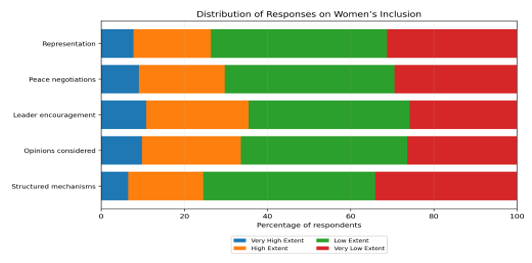
Figure 1: Percentage Distribution of Responses on the Extent of Women’s Inclusion
Conclusion
The inclusion of women in decision-making processes within traditional institutions is an important aspect of gender equality, participatory governance and sustainable community development. Traditional institutions in Bayelsa State play significant roles in community leadership, cultural preservation, conflict resolution and the maintenance of social relationships. Therefore, ensuring that women have opportunities to participate in these institutions is essential for promoting inclusive governance and ensuring that decisions reflect the interests and experiences of different members of the community. Women's inclusion should not be measured solely by their attendance at community meetings or participation in women's associations, but also by their representation in traditional leadership structures, opportunities to express their opinions, involvement in deliberations and influence on final decisions. Cultural expectations, customary practices, institutional arrangements, economic constraints and gender stereotypes may affect women's opportunities to participate meaningfully in traditional governance. However, the extent to which these factors influence women's participation in Bayelsa State must be established through empirical investigation.
The study therefore emphasises the need to examine the level of women's inclusion in traditional decision-making processes, identify the factors that facilitate or constrain their participation and determine how traditional institutions can become more inclusive. Promoting women's involvement in these institutions could strengthen community representation, improve conflict-resolution processes and support more equitable development outcomes. Ultimately, meaningful inclusion requires the recognition of women's contributions, the removal of institutional barriers and the creation of opportunities for women to participate actively in decisions affecting their communities.
Based on the issues examined in this study, the following recommendations are proposed:
1. Promote women's representation in traditional institutions. Traditional rulers and community leaders in Bayelsa State should encourage women's representation in traditional councils, community committees and other recognised decision-making structures to ensure that women's interests are adequately considered.
2. Review restrictive customary practices. Traditional institutions should examine customary rules and practices that unnecessarily restrict women's participation in leadership, community meetings and decision-making, while working with community members to promote fair and inclusive procedures.
3. Strengthen women's leadership capacity. Government agencies, civil society organisations and women's associations should organise leadership training, civic education and capacity-building programmes to equip women with the knowledge and skills required to participate effectively in traditional governance.
4. Improve women's participation in community meetings. Traditional rulers should establish transparent meeting procedures that allow women to attend, express their opinions, make recommendations and participate in deliberations without discrimination or intimidation.
5. Include women in peacebuilding and conflict resolution. Women should be represented in community peace committees, mediation processes and customary dispute-resolution initiatives because their experiences and perspectives can contribute to inclusive dialogue and sustainable conflict management.
Declaration of Competing Interest
The authors declare that they have no known competing financial interests or personal relationships that could have appeared to influence the work reported in this paper.
References
Akindele, I. T., & Dunmade, E. O. (2020). The role of gender and religion on women participation in decision making process in Nigeria. Fountain University Osogbo Journal of Management, 5(2). https://www.management.fountainjournals.com/index.php/ojm/article/view/156
Ashade, O. A., & Osawe, C. O. (2025). Participatory governance: Assessing the facilitative leadership role of traditional rulers in the implementation of a decentralised policy in Nigeria. International Journal of Research and Innovation in Social Science, 9(2), 2890–2902. https://doi.org/10.47772/IJRISS.2025.9020223
Federal Ministry of Women Affairs. (2021). National gender policy (2021–2026). Federal Republic of Nigeria. https://faolex.fao.org/docs/pdf/nig228614.pdf
Human Rights Watch. (2024). World report 2024: Nigeria. https://www.hrw.org/world-report/2024/country-chapters/nigeria
Niger Delta University. (n.d.). A history of the traditional rulers in Ogboin Clan from 1956 till date. https://www.ndu.edu.ng/a-history-of-the-traditional-rulers-in-ogboin-clan-from-1956-till-date
Nigerian Women's Trust Fund. (2024). National gender in Nigeria report 2023. iPrint Hub Innovations.
Omekwe, A. S. (2025). The impact of absentee leadership and the dynamics of traditional rulers in contemporary African societies: The Bayelsa experience. The Scale Journal, 4(1). https://www.researchgate.net/publication/407042682_The_Impact_Of_Absentee_Leadership_And_The_Dynamics_Of_Traditional_Rulers_In_Contemporary_African_Societies_The_Bayelsa_Experience
Ubodiom, E. (2026). Women in conflict management in Nigeria: The experience of Bayelsa State, 1999–2025. BW Academic Journal. https://www.bwjournal.org/index.php/bsjournal/article/view/4188
United Nations. (2024). Accelerating the achievement of gender equality and the empowerment of all women and girls by addressing poverty and strengthening institutions and financing with a gender perspective (E/CN.6/2024/3). https://digitallibrary.un.org/record/4037053
United Nations in Nigeria. (2022). Traditional, religious leaders commit to supporting women's participation in elections and preventing electoral gender-based violence. https://nigeria.un.org/en/200830-traditional-religious-leaders-commit-supporting-womens-participation-elections-and
UN Women. (2024). Federal Republic of Nigeria: Gender equality and women's empowerment. https://www.unwomen.org/sites/default/files/2024-11/b30_report_nigeria_en.pdf
UN Women. (2025). Outcome NGA_D_1.1: Accountable, transparent, gender-responsive and inclusive governance and justice system in Nigeria. UN Women Transparency Portal. https://open.unwomen.org/en/outcome-detail/XM-DAC-41146-NGA_D_1.1
How to Cite This Article
Yabaka, F. T., Onyige, C. D. and Kpae, G. (2026). Women Decision-Making Processes Within Traditional Institutions in Bayelsa State. Carl Advance Multidisciplinary, 3(1), 44-54. https://doi.org/10.70726/cam.2026.6583006