

Enhancing National Security Through Prospective Countermeasures to Terrorism in Nigeria
- a Nigeria Legion
- b Nigeria Custom Service
- c University of Port Harcourt
Highlights
Not provided.
Abstract
All over the world, terrorism is a global condemnable crime committed by a loner or group of persons in other to cause chaos, civil unrest and destructions. In Nigerian, this criminal act has long been in existence but became a national emergency situation since July 2009 as documented. Since then, the government of Nigeria has been battling this rebellious militant armed group which was formed with various ideology and mission against the state of Nigeria. In other for the government of Nigeria to tackle this menace, a federal law was enacted cited as the Terrorism Prevention and Prohibition Act, 2022, which provide detailed legal document for punishment of acts of terrorism and its financing. This paper seeks to proffer tri-state countermeasures to dislodge terrorism in activities the country, evaluate and analyzed some documented terror activities obtained from newspaper publication, published journals by scholars, and other related trusted data sources. The study results show in recent times terrorist activities continue to thrive most especially in the Northern part of Nigeria despite national policies criminalising terrorist activities and current state of security measures put in place for rapid response to crime scene seem not to be effective in combatting terrorist. This paper has put forward preventive mechanism, adoptable strategies and non-biased recommendation for eradicating terrorism in Nigeria.
Keywords
Introduction
Terrorism is a worldwide condemnable crime committed by a loner or group of persons which may be either ideological, political, religious, tribal or government motivated with the intent to cause civil unrest, chaos, or destruction of lives and properties just to archive set objectives. The United Nations Office on Drugs and Crime (UNODC, 2018) highlight terrorism as criminal acts that threatens to utilize violence that may cause death, fatal injury, or hostage-taking in order to spread fear just to attain political or ideological goals. Since the emergence of terrorism in Nigeria in 2009. This terrorist group, whose fanaticism deeply anchored on religious ideology began their violent campaign in the northeastern part of Nigeria targeting religious centers, security agencies, government infrastructure, and civilians. in a report by BBC News (2016), this terror group marked a new landmark as one of the top leadings causes of internal security threats, a new era of incessant bombing, mass abductions, and several assassinations that have claim lives and internal displacement of persons.
Literature Review
Terrorist activities in Nigeria have been primarily executed by known terror group such as Boko Haram, Islamic State West Africa Province (ISWAP), and other unknown factions. their violent activities have been devastating, forcing community displacement, and slowing downing economic activities and government outreach programs within the affected area. The federal government of Nigeria through its effort to fight against terrorism, deployed military servicemen and establishment of "Operation Lafiya Dole" and recently renamed "Operation Hadin Kai” to dislodge terror groups in the North-East (Ajayi, 2020). Numerous studies show how the military intervention has help reclaiming territories, and disrupt terrorist command structures. However, reality shows that military servicemen on ground lack funding, low morale during coordinated operation, and human rights violations which sometimes set apart local community’s corporation (Erunke, 2022).
For an effective counter-terrorism, intelligence gathering is paramount, the federal government of Nigeria has made great effort in strengthening it intelligence capabilities through various federal agencies such as community-based intelligence service, military intelligence units, and Department of State Services (DSS). the use of emerging technology such as drones and electronic interceptors has also gain traction including human intelligence (Oche, 2021). Despite all this modernization, inter-agency cooperation still suffer setback in rapid response due to slow pace of dissemination intelligence information (Abdullahi & Abdulkadir, 2020), expert opinion suggests for an improved vital intelligence gathering, community leadership inclusion is important in closing the gap between security agencies and rural communities.
Experts suggest that emergence of terror activities in Nigeria intimately connected with youth restiveness, unemployment, indigence, and psychological manipulation. As a result, expert suggest non-lethal solutions such job creation, education, and addressing poverty. Also employing government Initiatives such as National Social Investment Program (NSIP) and North-East Development Commission (NEDC) to help mitigate extremist beliefs. (Ogbonnaya, 2020). Furthermore, counter-radicalization initiatives such as "Operation Safe Corridor" was set up to help rehabilitation and reintegrate former insurgents, while this effort may have yielded positive result, concerns arise on how effectiveness the counter-radicalization initiatives has changed their extremist beliefs and community acceptance (Akinola, 2019). In other to further criminalize this radical extremist group, The Nigerian government enacted The Terrorism (Prevention and Prohibition) Act, 2022, which provides a legal framework for detecting, arresting, preventing, prosecuting, punishing, and financing of terrorism and related activities. In 2016, federal government also introduced a framework called National Counter-Terrorism Strategy (NACTEST) for tackling terrorism using both conventional warfare and diplomatic efforts (Edeko, 2017). Notwithstanding these efforts, corruption, inadequate implementation, and Interference with Judicial Decision-Making lead to Weak implementation. analysts underscore the violation of fundamental rights and absence of formal charges (Chukwuma, 2021).
The involvement of community plays a vital role counterterrorism operation. Strategic Initiatives directed to foster confidence between security operatives and local communities have been introduced. by encouraging citizens involvement, this initiative is tailored towards enhancing intelligence gathering reduce support for terrorist groups. (Olojo, 2013). Nigeria’s strategy for combating terrorism has changed over time from relying on security agencies to adoption of a better comprehensive strategies such as legal reforms, intelligence gathering, social advancement, and inter-agency cooperation. for this effort to be substantive, rigorous implementation, active community inclusion, transparency, accountability from the governance is of the essence.
Materials and Methods
In Nigeria, Terrorism remains a major challenge to national security, particularly in the northeast which serve as terrorist theater of operation. This paper will apply the use of analytical tools to extract insights from documented terror incidents, propose an innovative a tri-state countermeasures architecture, preventive mechanism, non-biased recommendation for eradicating terrorism in Nigeria.
Data Collection
our primary data source regarding terrorism incidents was obtained from Nigeria Security Tracker (Council on Foreign Relations, 2023), a recognized repository of global terrorism database, and collated data from national news journal. the extracted data was analyzed to understand patterns, incidents, and fatalities.
Data Analysis and Visualization
A comprehensive analysis of the data modeling, evaluation, interpretation, and examining results from source data was instrumental in this study, most especially refining of news journal dataset. Furthermore, for visual interpretation of data, statistical and data visualization tools were used to analyze raw terrorism incident data and transforming it into meaningful insights which will aid academic research national policy formulation. The analytical tool provided inferential analysis by identify patterns, interrelationship, regional differences in terrorist activities. This data-driven approach strengthened the empirical basis for policy recommendations, making the findings more reliable, actionable, and grounded in evidence.
Nigeria
Security Tracker Dataset
The Nigeria Security Tracker (NST) was an
initiative carried out by the Council on Foreign Relations’ Africa Program as a
weekly survey of Nigerian since May 29, 2011 to July 1, 2023. their mission was
to document violence observed in Nigeria as a result of political, economic, or
social unrest. this research paper carried out data analytics to highlight
trends of terrorism and related activities between January 1, 2020 to July 1,
2023. although the data repository obtained from NST document was an indicative
Statistics data collect from multiple sources as stated on their website
(Council on Foreign Relations, 2023).
Collated News Journal Dataset
The dataset compilation was done at real-time from various news journal in Nigeria such as Vanguard, The Punch, Daily Trust, Daily Post, and News Agency of Nigeria from January 2023 to July 15, 2025. For better precision, a data capturing system was developed using PHP/MYSQL database to ensure normalize data entry fields and accurate conversion of numerical variables during field entries. Additionally, analysis was carried out which gave more insights about forces casualties, neutralized threats, and other relevant information that will aid counter terrorism action plan. Table 1 shows the analyses dataset fields included and Figure 1 shows the design user interface for the real-time data capturing of news journals in Nigeria were received data is transmitted to the my MYSQL database.
Tri-State Countermeasure Architecture
Table 1: Database Table Fields for News Journal Data Entry
|
# |
Field |
Description |
|
1 |
Incident location |
Place where the incident occurred |
|
2 |
News Headline |
Title of the news |
|
3 |
Forces Casualties |
No of servicemen deaths |
|
4 |
Neutralized threats |
No of terrorist deaths |
|
5 |
Arrests Made |
No of arrest made if any |
|
6 |
Data Source |
News Journal Name |
|
7 |
Data source URL |
Website Address |
|
8 |
Time |
Time the incident happened |
|
9 |
Date |
Date the incident happened |
|
10 |
Time-State |
Time status (Morning, Afternoon, Evening) |
|
11 |
Month |
The Month Name |
|
12 |
Year |
Year it happened |
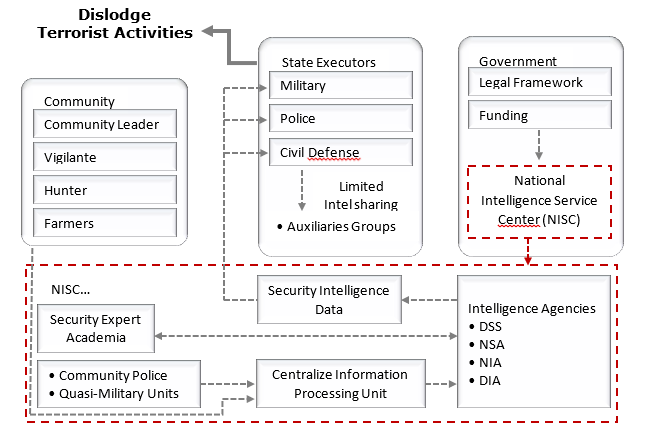
Figure 1: User Interface Design for News Journal Data Entry
a. The Community
When it comes to curbing criminal activities, Community involvement plays a crucial role for counter-terrorism operation, especially in the Northern Nigeria where the community remain the first responder to early warning systems and provision of timely intelligence gathering which may come from local leaders, vigilante groups, hunter, and farmers to support security forces operation at the theatre war (Table 2). This bottom-up security model create trust between community dwellers and the security forces thereby making the local community a key player in strengthening peace and stability. Furthermore, it is also essential, the government and security operatives should build community trust, and provide basic training for community vigilante and hunters in area of identification of threats, suspicious movements, intelligence gathering, and to secure at-risk areas.
b. State Executors (Servicemen)
Security agencies collaboration is essential for an effective counter-terrorism operation in Nigeria. This involves coordinated ties among the military, police, civil defense, and local auxiliaries not limited to groups such as Civilian Joint Task Force (CJTF), vigilante Group of Nigeria, and Nigerian Hunter & Forest Security Service to strengthen rapid response to threats (Table 3). By this collaboration, security forces share timely intelligence, execute joint operations, define operational roles to avoid duplication of duties, continuous training to sustain combat readiness of servicemen, and regulated strategic intelligence sharing with auxiliary groups while maintaining standard operating procedure for collaboration.
c. Government
The government of any nation plays a vital role in counter-terrorism, In Nigerian, the federal government in recent time has step up its fight against terrorism by providing large financial resources for security operations and establishment of the Terrorism (Prevention and Prohibition) Act, 2022 as legal framework which the enforcement may have been partially executed. These works seek to propose a centralized unified intelligence system called "National Intelligence Service Center (NISC)". this center shall be composed of intelligence agencies such as Department of State Services (DSS), National Security Adviser (NSA), National Intelligence Agency (NIA), Defense Intelligence Agency (DIA), Security Experts, and academia (Table 4). The intelligence agency’s primary role is to obtained raw information through the "Centralize Information Processing Unit" with contributory data source not limited to local communities, undercover servicemen on ground, Local Community Police, and Quasi-Military Units (Man-o-War, Boy Scouts of Nigerian, Red Cross Society, Peace Cops, etc.). the data obtained shall be analyzed and transformed into proper "Security Intelligence Data" with onward transmission to State Executors (Security Forces). furthermore, this center shall provide strategic operation framework base on processed data to aide government security plan actions, founding and updating of legal frameworks to suit current operations.
Table 2: Summary of Community Involvement Metrics
|
# |
Key Players |
Role |
Support Activities |
|
1 |
Community Leaders |
Leaders (Traditional Rulers, Youth Leaders, Religious leaders) to galvanize community engagement |
intelligence sharing, Mediate disputes cultivate watchfulness |
|
2 |
Vigilante |
Support community local security |
Report odd behavior Night patrols Crime Detection |
|
3 |
Hunters |
Perform local reconnaissance |
Report suspicious activities |
|
4 |
Farmers |
Denying terrorists access to resources and support |
Report suspicious activities |
Table 3: Summarize Metric of State Executors
|
# |
Key Players |
Role |
Support Activities |
|
1 |
Military (Army, Navy, Air force) |
Leading military engagements and safeguarding volatile locations
|
Neutralize threats Aerial surveillance Conduct raids & patrol |
|
2 |
Police (NPF) |
Law enforcement and prosecution
|
Probe Arrest suspects Maintain public order |
|
3 |
Civil Defense (NSCDC |
Securing government infrastructures |
Protect key installations Make Arrest Work with locals |
|
4 |
Auxiliary groups |
Lead auxiliary support under supervision and provide local terrain intelligence |
Report threats Assist in tracking Guide Servicemen Respond to local threats |
Table 4: Summarized Matric Table for Government Involvement.
|
# |
Key Players |
Role |
Support Activities |
|
1 |
Legal Framework |
Update Terror laws, redefine terrorism-related offenses, control national response strategies, Budget for operations, and Procure equipment
|
Establish counter-terrorism laws Prosecute offenders Regulate firearms Place importance on security |
|
2 |
National Intelligence Service Center (NISC) |
Synchronize data across agencies Develop post-conflict efforts Generate Security Intelligence data Community involvement models SOP for Agency engagement
|
Secure intel Sharing Support for informants Develop deradicalization Initiatives civilians Protection order |
Finally, combating terrorism in Nigeria requires unified remodel enhanced security strategy, provision of basic infrastructures, centralizing intelligence sharing, inter-agency collaboration, youth engagement, post conflict deradicalized training initiatives, full enforcement of terrorism laws, improved civil-military relationship, and learning from past less effective security strategies.
Results and Discussion
Data analytics from combine dataset (News journal and Nigeria Security Tracker (NST)) reveals insights into terror-related incidents in Nigeria from January 2019 to July 1, 2023 for NST and January 2023 to July 15 2025 for news journal dataset which shows high terror casualties in Borno State which was estimate at 357, followed by Kaduna which was estimated at 53 as shown in Figure 3, fewer arrest was made as indicated from the dataset. The NST data reveals a disturbing trend in both the number of casualties and incidents, in 2019 alone, there were 1,548 incidents causing 8,340 casualties. as at 2021, this number jump-up to 2,285 incidents resulting in 10,399 casualties estimated which was reveal to be all time high of terror violence. as government intensify all out offensives and a change in military action plan, a decrease in terror activities was observed from 2022 with 1,922 incidents and 9,079 casualties estimated, further drop-in incidents rate was noticed resulting in 3,920 estimated casualties and 860 incidents reported. Figure 4 also illustrated the graph of total incident in the event area.
The NST data further suggests that Borno State has the highest number of casualties estimated at 11,302, closed followed by Zamfara State with estimate at 5,217 casualties. suggesting high rate of terror incident from both insurgent and bandit activities. Other states like Katsina with 2,226, Benue 1,772, and Plateau 1,139 estimated casualties was reported, this result indicate terror activities has gone beyond its original conflict stronghold to other part of northern Nigeria. Figure 5 shows the total causality of the event.
Figure 4: Incidents from 2019 to 2023, Data Source: Council on Foreign Relations (2023)
Figure 5: Incidents from 2019 to 2023, Data Source: Council on Foreign Relations (2023)
When comparing dataset from both NST figures and News journal, result shows that Borno state and Zamfara state appears to be consistent which pose a security concern in recent times, other state such as Benue, Plateau, and Sokoto also showed up in both datasets confirming their importance to be included as conflict zone. Finally, Figure 6 further highlights other possible data patterns such as Morning, Afternoon, Evening distributions which provides useful information about possible sensitivity attack period by terror group and need for state of alertness by servicemen to respond any incident.
Preventive Mechanism
1. Deny safe heaven to individuals who support and finance terror groups
2. Build strong information sharing partnership with local community and improved inter-agency relations
3. Increase public awareness on the need to report suspicious movement to the nearest security agency
4. Suppress the recruitment of "Repented Terrorist" into any government security platforms
5. Decentralized standby ready to engage "Rapid Response Force"
6. Control and supervise religious activities especially the kind of information they are been feed with which may lead to radicalization.
Figure 6: News Journal Dataset of Incident Report by Time Distribution
Conclusion
For Nigeria to effectively tackle terrorism according this research findings shows that community intelligence gathering is a critical key to successful apprehension of terror perpetrators and precision servicemen interventions. Enforcement of terrorism legal framework also supports government effort in fighting terror activities. Proposed Tri-state countermeasure architecture, if adopted will further assist to mitigate terror activities in Nigeria. Nigeria can improve on its counter-terrorism by adopting new strategies, implement the use of precision surveillance device, build community trust, increase combat operational funding, and shorten command of forward operation bases protocol such airstrikes, backup, and medical evacuation.
Recommendations
1. Encourage community based early warning system: This is essential for the fight against terrorism by combining community intelligence gathering, installation of response Communication Devices, encourage neighborhood watch with strict monitoring, and improved civil-military relationship.
2. Adopting the use of proposed Tri-state countermeasure architecture: Which provide insights on sequence of intelligence gathering and state actors action plan and activities to mitigate terror violence.
3. Encourage Deradicalization initiatives: Government should allocate more funding for rehabilitation and reintegration of former militants and discourage their admission into any security agencies because they might compromise security details to their former paymasters.
4. Encouragement of research and development of Surveillance Devices and other miliary equipment which Nigeria is restricted from acquisition
5. Development of state-owned Electronic Mapping System (EMS) chip to replace most frequently use Global Positioning System (GPS), it has been observed by servicemen that their location is constantly been compromise due to tracking with commercial GPS devices.
6. Enforcement of Terrorism (Prevention and Prohibition) Act, 2022: with full implementation of this legal framework, persons found guilty of terror offences will be charge according to the law, this will boost Nigerians confidence level in the government fight against terrorism and related maters
Declaration of Competing Interest
The authors declare that they have no known competing financial interests or personal relationships that could have appeared to influence the work reported in this paper.
References
Abdullahi, S. M., & Abdulkadir, A. (2020). Intelligence sharing and counterterrorism in Nigeria: Bridging the gaps. African Security Review, 29(2), 125–138. https://doi.org/10.1080/10246029.2020.1763890
Akinola, O. (2019). The rehabilitation of repentant Boko Haram militants in Nigeria: Lessons from the Niger Delta Amnesty Program. Studies in Conflict & Terrorism, 42(10), 875–895. https://doi.org/10.1080/1057610X.2018.1453495
Ajayi, A. I. (2020). Military responses to terrorism in Nigeria: Patterns, effectiveness, and implications. African Conflict and Peacebuilding Review, 10(1), 65–88.
BBC News. (2016, February 16). Boko Haram: Nigeria's Islamist insurgency. https://www.bbc.com/news/world-africa-13809501
Chukwuma, I. (2021). Nigeria’s anti-terrorism law and the challenge of human rights protection. Nigerian Journal of Human Rights Law, 21(2), 57–71.
Council on Foreign Relations. (2023, July 1). Nigeria Security Tracker. https://www.cfr.org/nigeria/nigeria-security-tracker/p29483
Edeko, S. E. (2017). Evaluating Nigeria’s national counter-terrorism strategy (NACTEST): Implementation and policy concerns. Journal of Law and Security Studies, 8(2), 111–123.
Enders, W., & Sandler, T. (1996). The political economy of terrorism. Cambridge University Press.
Erunke, C. E. (2022). Geospatial and statistical analysis of terrorism trends in Nigeria. South African Journal of Geomatics, 11(1), 65–77. https://www.ajol.info/index.php/sajg/article/view/242242
Institute for Economics & Peace. (2024). Global Terrorism Index: Measuring the impact of terrorism. https://www.visionofhumanity.org/maps/global-terrorism-index/
Oche, A. U. (2021). Surveillance technology and the war against insurgency in Nigeria. Journal of Strategic and Intelligence Studies, 4(1), 33–50.
Ogbonnaya, U. M. (2020). Poverty and insecurity nexus: A critical review of Nigeria’s counter-terrorism strategy. African Journal of Social Sciences, 12(4), 82–96.
Olojo, A. (2014). Countering Boko Haram in Nigeria: The role of local communities. Conflict Studies Quarterly, 10(3), 45–60. https://www.researchgate.net/publication/285543445_Nigeria's_Troubled_North_Interrogating_the_Drivers_of_Public_Support_for_Boko_Haram
Thomas, R. J. (2025). The evolution of terrorist tactics in Sub-Saharan Africa: From insurgency to hybrid warfare. African Security Review. Advance online publication.
United Nations Office on Drugs and Crime. (2018). Counter-terrorism module 1: Introduction to international terrorism. https://www.unodc.org/documents/e4j/18-04932_CT_Mod_01_ebook_FINALpdf.pdf
How to Cite This Article
Lekara, T. D., Nna Daniel, C. and Alabi, O. A. (2025). Enhancing National Security Through Prospective Countermeasures to Terrorism in Nigeria. Carl Advance Multidisciplinary, 3(1), 27-35. https://doi.org/10.70726/cam.2026.6583004