
Assessing Community-Based Pathways for Strengthening Disaster Risk Reduction and Resilience in South-East Nigeria under the Sendai Framework
- a United Nation Development Program
Highlights
- The study examined community-based disaster risk reduction (DRR) strategies in South East Nigeria within the Sendai Framework (2015–2030).
- Surveyed 22 policymakers, local officials, and community leaders using structured questionnaires and descriptive statistics.
- 45.5% favoured integrated DRR strategies combining funding, partnerships, capacity building, and local risk assessment.
- 59.1% supported integrated pathways for infrastructure resilience involving governance, risk data, planning, and investment.
- Findings emphasize coordinated, inclusive, and grassroots-focused approaches to strengthen disaster resilience.
Abstract
This study critically explores community-based strategies for disaster risk reduction (DRR) in South East Nigeria within the framework of the Sendai Framework for Disaster Risk Reduction (2015–2030). Utilizing empirical data from 22 respondents including community leaders, local officials, and policy practitioners the research examines preferred approaches for enhancing resilience by 2030. Results indicate strong support for integrated strategies combining funding programs, multi-sector partnerships, capacity building, and localized risk assessment. A significant proportion of respondents emphasized the need for a comprehensive national emergency risk framework, early warning systems, and place-based resilience data to empower local action. Quantitative analysis reveals that 45.5% of respondents favoured a holistic approach across DRR domains, underscoring the recognition of interdependent solutions. Further, 59.1% advocated for multi-pronged pathways to infrastructure resilience encompassing governance reforms, spatial risk data, scenario planning, and strategic investments. The findings highlight a growing consensus on the necessity of coordinated, grassroots-focused interventions to translate policy commitments into sustainable and inclusive resilience outcomes in hazard-prone regions.
Keywords
Introduction
Globally, the Sendai
Framework for Disaster Risk Reduction (SFDRR) (2015–2030) marked a paradigm
shift from reactive emergency response to proactive disaster risk management. It
emphasizes four priority areas: understanding risk, strengthening governance,
investing in resilience, and enhancing preparedness for recovery and
reconstruction (UNDRR, 2015). In Nigeria, the increasing frequency and
intensity of natural and human-induced hazards especially in the South East
pose considerable challenges to community resilience (Adelekan, 2017). In light
of these challenges, this study seeks to identify the primary strategies
perceived as necessary to accelerate disaster risk reduction and enhance
resilience under the Sendai Framework, while also evaluating the infrastructure
and policy pathways available to empower local communities in South East
Nigeria to implement effective disaster resilience initiatives. By examining
both strategic perceptions and structural capacities, the study aims to
contribute to a more localized and inclusive understanding of disaster risk
governance in the region.
South Eastern Nigeria is increasingly susceptible to environmental hazards such as flooding, gully erosion, and land degradation. These hazards, if not managed through context-specific and community-oriented strategies, risk undermining sustainable development in the region (Nkwunonwo et al., 2020). Existing literature underscores the significance of integrated, inclusive, and participatory disaster risk reduction (DRR) models that empower local governments and communities (Izinyon & Olagunju, 2021). Policy recommendations call for harmonized risk frameworks, infrastructure resilience investments, and the institutionalization of early warning systems to foster sustainable adaptation (Ajaero & Anorue, 2018). However, there remains a need to empirically validate which strategies are perceived as most effective and acceptable by the local populace.
Disaster Risk Reduction (DRR) and resilience building have become global priorities, particularly under the Sendai Framework for Disaster Risk Reduction 2015–2030 (UNDRR, 2015). The Sendai Framework emphasizes proactive risk management, rather than reactive emergency response, with a strong focus on community-based approaches. In the context of South East Nigeria a region marked by recurrent environmental hazards such as flooding, erosion, and oil-related pollution community-driven pathways have emerged as both practical and necessary for sustainable disaster resilience. Community-based disaster risk reduction (CBDRR) is a participatory process where communities themselves assess, plan, and implement DRR strategies tailored to local vulnerabilities and capacities (Shaw, 2012). In South East Nigeria, several socio-environmental challenges including land degradation, poor urban planning, and inadequate infrastructure compound the region’s exposure to both natural and anthropogenic hazards. The effectiveness of community-based pathways in such settings depends largely on the interplay between local knowledge, governance structures, and external support systems (Adelekan, 2010).
Studies show that local communities in states such as Anambra, Enugu, and Imo have demonstrated indigenous coping strategies in managing seasonal flooding and erosion. These include the use of sandbags, community-based drainage clearing, and informal early warning systems (Nkwunonwo, Whitworth, & Baily, 2020). While these mechanisms are commendable, they often lack coordination and institutional support. Under the Sendai Framework, such local initiatives should be scaled and institutionalized, ensuring that local actors are not only informants but active planners in DRR programs (UNDRR, 2015).
Moreover, effective community-based pathways must be supported by robust governance. South East Nigeria faces challenges of fragmented DRR coordination among local government authorities, weak regulatory enforcement, and limited financial resources. These barriers hinder the implementation of Sendai’s Priority 2: “Strengthening disaster risk governance to manage disaster risk” (UNDRR, 2015). Without clear delineation of roles across state and community actors, risk management efforts remain reactive and ad hoc.
Capacity building is also pivotal. Evidence from community surveys in the region reveals gaps in public awareness and DRR education (Egbinola, Amanambu, & Oloukoi, 2017). Many households lack the knowledge or tools to anticipate and respond to hazards. Integrating DRR into school curricula, public campaigns, and religious organizations has been suggested as a way to close this knowledge gap. Additionally, training local volunteers and community leaders on disaster preparedness, first aid, and response coordination can significantly improve resilience at the grassroots level (Akinyemi & Oke, 2020).
More so, the role of women, youth, and other vulnerable groups must be considered in community-based resilience frameworks. The Sendai Framework advocates for inclusivity in DRR planning, emphasizing that marginalized groups often bear the brunt of disasters. However, socio-cultural norms in parts of South East Nigeria sometimes limit the participation of women and youth in decision-making processes (Eguavoen, 2019). Addressing these systemic inequalities is essential for a truly community-driven and sustainable resilience framework.
Materials and Methods
Study Area
South East Nigeria, comprising Abia, Anambra, Ebonyi, Enugu, and Imo States (Figure 1), is a region marked by diverse ecological zones, including rainforest and derived savannah, and is highly prone to environmental hazards. The area frequently experiences flooding, gully erosion, landslides, and fire outbreaks, particularly in urban centers like Onitsha, Aba, and Owerri. These hazards are exacerbated by poor urban planning, inadequate infrastructure, and the impacts of climate change. With a population exceeding 20 million, the region has high population density, rapid urbanization, and economic activities centered around commerce, agriculture, and informal trade, making communities highly vulnerable to disasters.
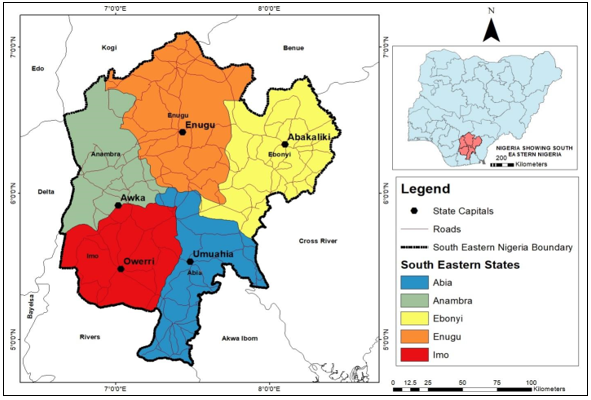
Figure 1: Overview of the South-East Region and their States
Despite these challenges, South East Nigeria possesses robust community structures such as traditional institutions, town unions, and local associations that play key roles in grassroots mobilization. However, disaster governance remains weak due to limited government capacity, poor coordination, and low integration of community knowledge in formal disaster risk reduction (DRR) strategies. This study location is highly relevant under the Sendai Framework, providing a critical setting to assess how community-based mechanisms can strengthen DRR and resilience. It enables the exploration of localized responses and the potential for aligning indigenous strategies with global priorities to reduce risk and enhance community preparedness and adaptive capacity.
Research Design and Data Collection
A descriptive survey design was employed to explore prevailing perspectives on disaster risk reduction (DRR) and resilience-building in South Eastern Nigeria. Structured questionnaires were distributed to 22 purposively selected respondents, including policymakers, local government officials, and community leaders across various jurisdictions. These participants were chosen for their strategic roles in the planning and implementation of DRR initiatives at different administrative levels. The questionnaire captured key elements of the Sendai Framework, including institutional effectiveness, risk awareness, and community-based preparedness.
Data Analysis
Data collected were processed and analysed using the Statistical Package for the Social Sciences (SPSS), version 26.0. The primary statistical model applied was the univariate descriptive analysis model, which focuses on summarizing individual variables. Descriptive statistical techniques specifically frequencies and percentages were used to interpret the data, providing insights into dominant views, levels of awareness, and institutional capacities. This approach enabled the identification of commonalities and differences in stakeholder responses, offering a reliable overview of local priorities and challenges. The use of SPSS ensured systematic data management and allowed for the accurate presentation of trends and patterns relevant to disaster resilience in the region.
Results and Discussion
Socio-Economics Characteristics of Respondents
The socio-demographic characteristics of the respondents are presented in Table 1. The results show that males constituted the majority of respondents (54.5%), while females accounted for 45.5%. Regarding age, most respondents (63.6%) were aged 41–60 years, followed by those aged 20–40 years (27.3%), while 9.1% were aged 61 years and above. None of the respondents were below 20 years. All respondents (100.0%) had attained tertiary education, indicating a highly educated study population. Occupationally, civil servants predominated (77.3%), followed by respondents in other occupations (18.2%) and farmers (4.5%). No respondents were traders, artisans, fishermen, unemployed, or without occupation. In terms of household size, the majority (72.7%) belonged to households comprising 1–5 persons, while 27.3% had household sizes of 6–10 persons. No household had more than 10 members. Regarding duration of stay in the study area, 27.3% had stayed for 1–5 years, another 27.3% for 6–10 years, 18.2% for 11–15 years, and 27.3% for more than 15 years.
Table 1: Demographic Information of Respondents
|
Variables |
Frequency (n =22) |
Percentage (%) |
|
Gender |
|
|
|
Male |
12 |
54.5 |
|
Female |
10 |
45.5 |
|
|
|
|
|
Age (Years) |
|
|
|
Less than 20 |
0 |
0.0 |
|
20-40 |
6 |
27.3 |
|
41-60 |
14 |
63.6 |
|
61 and above |
2 |
9.1 |
|
|
|
|
|
Educational Status |
0 |
0.0 |
|
No formal Education |
0 |
0.0 |
|
Primary Education |
0 |
0.0 |
|
Secondary Education |
0 |
0.0 |
|
Tertiary Education |
22 |
100.0 |
|
|
|
|
|
Occupational Status |
|
|
|
Civil Servant |
17 |
77.3 |
|
Farmers |
1 |
4.5 |
|
Traders |
0 |
0.0 |
|
Artisans |
0 |
0.0 |
|
Fishermen |
0 |
0.0 |
|
Unemployed |
0 |
0.0 |
|
Others |
4 |
18.2 |
|
|
|
|
|
Household size |
|
|
|
1 – 5 |
16 |
72.7 |
|
6 – 10 |
6 |
27.3 |
|
11-15 |
0 |
0.0 |
|
Above 15 |
0 |
0.0 |
|
|
|
|
|
Duration of Stay (Years) |
|
|
|
1 - 5 |
6 |
27.3 |
|
6 - 10 |
6 |
27.3 |
|
11 - 15 |
4 |
18.2 |
|
Above 15 |
6 |
27.3 |
Strategies to Accelerate Disaster Risk Reduction by 2030
Table 2 analyses respondents’ preferences for disaster risk reduction (DRR) strategies among a sample of 22 individuals. A notable 22.7% favoured funding programs aligned with community needs, highlighting the importance of directing resources to address local vulnerabilities effectively. Only 9.1% prioritized viewing DRR beyond disaster management through multi-sector partnerships, and another 9.1% emphasized capacity building for local governments and communities suggesting limited focus on systemic collaboration and empowerment. Meanwhile, 13.6% selected the development of mechanisms to measure DRR locally, reflecting a moderate recognition of the need for localized monitoring and accountability tools. Significantly, 45.5% of respondents opted for “all of the above,” indicating a strong inclination toward a comprehensive, integrated approach. This dominant view suggests that many stakeholders recognize the interdependence of funding, partnerships, local capacity, and monitoring in achieving effective DRR. The results point to a growing awareness of the need for holistic interventions that align with the Sendai Framework for Disaster Risk Reduction, emphasizing that successful DRR requires synergy across multiple strategic fronts rather than reliance on a single intervention.
Table 2: Strategies to Accelerate Disaster Risk Reduction by 2030
|
Strategy |
Frequency |
Percentage (%) |
|
Funding programs aligned with community needs |
5 |
22.7 |
|
Viewing DRR beyond disaster management and leveraging multi-sector partnerships |
2 |
9.1 |
|
Capacity building for local governments and communities |
2 |
9.1 |
|
Mechanisms to measure disaster risk reduction locally |
3 |
13.6 |
|
All of the above |
10 |
45.5 |
|
Total |
22 |
100.0 |
Empowering Local Action for DRR
Table 3 presents data on the perceived needs for effective disaster risk reduction at the local level. Among the 22 respondents surveyed, 27.3% (6 respondents) identified the National Emergency Risk Management Framework as the most crucial need, while 9.1% (2 respondents) emphasized the Nigerian Strategy for Disaster Resilience. Additionally, 18.2% (4 respondents) highlighted the importance of Flood Warning Infrastructure. Notably, 45.5% (10 respondents) selected all of the above options, indicating a strong preference for a comprehensive and integrated approach to disaster risk reduction. This suggests that stakeholders recognize the need for combining policy frameworks, strategic planning, and early warning infrastructure to effectively empower local action in mitigating disaster risks.
Table 3: Empowering Local Action for DRR
|
Needs |
Frequency |
Percent (%) |
|
(a) National Emergency Risk Management Framework |
6 |
27.3 |
|
(b) Nigerian Strategy for Disaster Resilience |
2 |
9.1 |
|
(c) Flood Warning Infrastructure |
4 |
18.2 |
|
All of the above |
10 |
45.5 |
|
Total |
22 |
100.0 |
Table 4 presents the distribution of responses regarding pathways to infrastructure resilience. The data show that 13.6% of respondents identified strategic resilience outcomes, particularly related to governance, as a key pathway. An equal proportion (13.6%) emphasized the importance of place-based risk data. Meanwhile, 13.5% of responses collectively highlighted scenario planning, land use, and investment guidance as relevant pathways. Notably, a majority 59.1% recognized all of the listed approaches as important for achieving infrastructure resilience. In total, the responses summed up to 22, accounting for 100% of the data set.
The preference for comprehensive, integrated approaches to DRR and infrastructure resilience revealed in Tables 2, 3, and 4 aligns closely with prevailing themes in the existing literature. Scholars and practitioners increasingly emphasize that effective disaster management must transcend single-sector interventions to embrace multi-dimensional and collaborative strategies (Aitsi-Selmi et al., 2016; Birkmann et al., 2016). The dominant selection of “all of the above” options in your findings mirrors this consensus, reinforcing calls for holistic frameworks integrating funding, governance, capacity building, and local monitoring. Your findings on the importance of community-aligned funding and capacity building resonate with prior studies highlighting the centrality of local context and empowerment in DRR (Shaw & Okazaki, 2004; Mercer et al., 2009). This reflects the growing recognition that disaster resilience depends on bottom-up approaches where local knowledge, capacities, and vulnerabilities are prioritized (Paton & Johnston, 2006). However, the relatively low emphasis on multi-sector partnerships and systemic collaboration in your data contrasts somewhat with literature advocating for broad stakeholder engagement and institutional coordination as critical success factors (Kapucu & Garayev, 2011; Comfort, 2007).
Table 4: Pathways to Infrastructure Resilience
|
Pathways |
Frequency |
Percent (%) |
|
(a) Strategic resilience outcomes (governance) |
3 |
13.6 |
|
(b) Place-based risk data |
3 |
13.6 |
|
(c, d, e) Scenario planning, land use, and investment guidance |
3 |
13.5 (total) |
|
All of the above |
13 |
59.1 |
|
Total |
22 |
100.0 |
Regarding local policy frameworks and infrastructure (Table 2 and 3), the respondents’ preference for integrated strategies echoes the literature’s focus on linking national policies with local implementation and technology-based early warning systems (Wisner et al., 2004; Kelman, 2018). Such integration is vital for translating policy into effective local action, consistent with the Sendai Framework’s emphasis on local-level DRR empowerment (UNDRR, 2015). Finally, the emphasis on governance, data-driven planning, and investment guidance as pathways to infrastructure resilience (Table 4) supports findings from studies on resilient infrastructure that advocate for governance reforms, evidence-based risk assessments, and scenario planning to reduce vulnerabilities (Cutter et al., 2014; Linkov et al., 201). The strong preference for integrated approaches also aligns with the "systems thinking" approach increasingly promoted in disaster resilience research (Folke, 2006).
Conclusions
This study has provided valuable insights into community-based disaster risk reduction (DRR) strategies in South East Nigeria, aligned with the goals of the Sendai Framework for Disaster Risk Reduction (2015–2030). The findings underscore a clear recognition among stakeholders of the importance of integrated, community-driven interventions in enhancing local resilience. A strong preference was expressed for strategies that combine financial support, multi-sector collaboration, capacity development, and localized risk assessment. The quantitative data affirms a growing alignment towards holistic and multi-pronged approaches, with 45.5% supporting integrated DRR strategies and 59.1% advocating for resilient infrastructure through governance reforms, spatial data utilization, and strategic planning. Overall, the study reveals a shared commitment to bottom-up, inclusive approaches as crucial to translating global DRR commitments into tangible, localized outcomes. Bases on the outcome, the following recommendations were proposed:
1. Develop and implement integrated emergency risk management systems, including early warning mechanisms and localized risk assessments tailored to community needs.
2. Invest in continuous training, empowerment, and inclusion of local stakeholders especially youth and women to build grassroots resilience and ownership of DRR initiatives.
3. Foster partnerships among government, private sector, and civil society, while integrating governance reforms and strategic investments to strengthen infrastructure and long-term resilience planning.
References
Adelekan, I. O. (2010). Vulnerability of poor urban coastal communities to flooding in Lagos, Nigeria. Environment and Urbanization, 22(2), 433–450. https://doi.org/10.1177/0956247810380141
Adelekan, I. O. (2017). Urban climate risk management in Nigeria. Current Opinion in Environmental Sustainability, 26–27, 106–114.
Aitsi-Selmi, A., Egawa, S., Sasaki, H., Wannous, C., & Murray, V. (2016). The Sendai Framework for Disaster Risk Reduction: Renewing the global commitment to people’s resilience, health, and well-being. International Journal of Disaster Risk Science, 7(2), 164–176.
Ajaero, C. K., & Anorue, L. I. (2018). Flood risk communication and community resilience in South-East Nigeria. Journal of Disaster Risk Studies, 10(1), a472.
Akinyemi, F. O., & Oke, A. E. (2020). Enhancing community resilience through disaster education: Insights from selected Nigerian communities. International Journal of Disaster Risk Reduction, 48, 101594. https://doi.org/10.1016/j.ijdrr.2020.101594
Birkmann, J., Cardona, O. D., Carreño, M. L., Barbat, A. H., Pelling, M., Schneiderbauer, S., ... & Zeil, P. (2016). Framing vulnerability, risk and societal responses: The MOVE framework. Natural Hazards, 67(2), 193-211.
Comfort, L. K. (2007). Crisis management in hindsight: Cognition, communication, coordination, and control. Public Administration Review, 67(s1), 189-197.
Cutter, S. L., Ash, K. D., & Emrich, C. T. (2014). The geographies of community disaster resilience. Global Environmental Change, 29, 65-77.
Egbinola, C. N., Amanambu, A. C., & Oloukoi, J. (2017). Flood management strategies and resilience in urban Nigeria: A case study of Ibadan. Jàmbá: Journal of Disaster Risk Studies, 9(1), 1–9. https://doi.org/10.4102/jamba.v9i1.386
Eguavoen, I. (2019). Gender, risk, and resilience in rural communities: Lessons from Nigeria. African Studies Review, 62(2), 80–101. https://doi.org/10.1017/asr.2019.17
Folke, C. (2006). Resilience: The emergence of a perspective for social–ecological systems analyses. Global Environmental Change, 16(3), 253-267.
Izinyon, O. C., & Olagunju, T. E. (2021). Mainstreaming disaster risk reduction in Nigeria: Strategic approaches. International Journal of Environmental Planning and Management, 7(3), 43–55.
Kapucu, N., & Garayev, V. (2011). Collaborative decision-making in emergency and disaster management. International Journal of Public Administration, 34(6), 366-375.
Kelman, I. (2018). Disaster diplomacy: How disasters affect peace and conflict. Routledge.
Linkov, I., Trump, B. D., & Keisler, J. (2018). The science and practice of resilience. Springer.
Mercer, J., Kelman, I., Lloyd, K., & Suchet-Pearson, S. (2009). Integrating indigenous and scientific knowledge bases for disaster risk reduction in Papua New Guinea. Geografiska Annaler: Series B, Human Geography, 91(2), 157-183.
Nkwunonwo, U. C., et al. (2020). A review of gully erosion in Nigeria: Causes, effects and management. Earth Science Reviews, 203, 103167.
Nkwunonwo, U. C., Whitworth, M., & Baily, B. (2020). A review of the impact of flooding in Nigeria: Towards a framework for adaptation and resilience. Disaster Prevention and Management, 29(6), 792–812. https://doi.org/10.1108/DPM-11-2019-0344
Paton, D., & Johnston, D. (2006). Disaster resilience: An integrated approach. Charles C Thomas Publisher.
Shaw, R. (2012). Community-based disaster risk reduction. Emerald Group Publishing.
Shaw, R., & Okazaki, K. (2004). Sustainable community-based disaster management practices in Asia: A review of case studies from Bangladesh, Indonesia, Japan, Republic of Korea, Pakistan, and the Philippines. Integrated Research on Disaster Risk (IRDR) Program.
UNDRR (2015). Sendai Framework for Disaster Risk Reduction 2015–2030. United Nations Office for Disaster Risk Reduction.
UNDRR. (2015). Sendai Framework for Disaster Risk Reduction 2015–2030. United Nations Office for Disaster Risk Reduction.
United Nations Office for Disaster Risk Reduction (UNDRR). (2015). Sendai Framework for Disaster Risk Reduction 2015–2030. https://www.undrr.org/publication/sendai-framework-disaster-risk-reduction-2015-2030
Wisner, B., Blaikie, P., Cannon, T., & Davis, I. (2004). At risk: Natural hazards, people’s vulnerability and disasters. Routledge.
How to Cite This Article
Amama, S. A., Wokoma, N. O. and Odele, M. (2026). Assessing Community-Based Pathways for Strengthening Disaster Risk Reduction and Resilience in South-East Nigeria under the Sendai Framework. Disaster and Safety Sciences, 3(1), 22-28. https://doi.org/10.70726/dss.2026.6567003